D.Shijirmaa, D.ShinetsogGeni / Mongolia
Among the members of the 83rd Overseas Visiting Group who visited Korea last year were two special guests: Sijirmaa and Shinechoggeni, a sister and brother dedicated to preserving Mongolian traditional culture. While touring the “Father’s True Heart” Exhibition and “Our Mother” Writing and Photo Exhibition, they took a moment to reflect on the deep-seated love and sacrifice of their parents—emotions they had long kept tucked away in their hearts. We invite you to discover the story of that parental love: the quiet, steadfast strength that supported them behind the scenes as they journeyed toward becoming the brilliant artists they are today.
#1 D.Shijirmaa
Coming to Korea with my brother has been a constant source of gratitude and joy, but one part of our journey resonated with me most deeply: visiting the "Father" and "Mother" exhibitions. Though I have attended many exhibitions throughout my life, I have never experienced one that pierced my heart so profoundly. It felt as though every display revealed the true extent of a parent's devotion—showing exactly how far they are willing to go for their children. Having received such overflowing love from my own parents, every single word in the exhibition struck a deep chord within me.
My parents, both members of the artistic community, raised us three siblings in a way that we never wanted for anything. However, as society underwent a period of upheaval in the 1990s, our circumstances changed drastically. Even amidst the chaos of the times, my parents remained determined to provide us with a good education. To that end, they left behind their stable jobs and familiar environment to move the family to Ulaanbaatar—a city where we had no connections at all. Even through my young eyes, I could see that uprooting the entire family to a strange city was a daunting task.
As expected, countless hardships awaited us. Our most immediate struggle was simply finding a place to lay our heads; in fact, we moved twelve times after arriving in Ulaanbaatar. There were times we were evicted because we lacked the money for rent, and other times we had to move wherever my parents could find work. It was only then—wandering the streets and skipping meals—that I finally began to perceive the exhausted lives my parents were leading, a reality I had been blind to when my belly was full.
Once, we found a house on the outskirts of the city. At the time, my parents worked near Sükhbaatar Square—a central landmark much like Gwanghwamun Plaza in Korea—which was a full three-hour walk from our home. After finishing work around midnight, my parents would trudge home through the dark night, dragging their exhausted bodies along the way. In Mongolia, there is a common practice where drivers pick up pedestrians heading in the same direction for a small fee. My parents still speak of the night a driver offered them a ride and quietly dropped them off at home without asking for anything in return. In the midst of such a grueling life, that act of selfless kindness provided them with immense comfort.
It was only through my parents' silent toil that my brother and I could focus on our studies and hone our craft without ever worrying about tuition. As a result, I was able to join a major theater company and spend twelve years on stage as a dancer and singer. I even had the honor of receiving several awards for my contributions to preserving and promoting Mongolian traditional culture.
While viewing the two exhibitions in Korea, I realized anew that every success I have achieved is built entirely upon my parents' sacrifice. Parents live solely for their children. It is that unconditional sacrifice and love that makes our lives truly meaningful and precious.
In the same way, Heavenly Father and Mother left all the glory of heaven behind to come to this earth, living a life dedicated solely to Their children. Though I sometimes forget this and find myself distracted by things of no substance, I cannot live a single day carelessly when I remember that the life of my soul came from Heavenly Father and Mother. I resolve to be a child who shares the boundless love I have received from my Heavenly Parents with all my heart.
#2 D.ShinetsogGeni
As artists themselves, my parents hoped that their children would follow in their footsteps. They did everything in their power to create an environment where we could immerse ourselves in music and be exposed to the finest performances. At the age of seven, I began my journey with the violin before eventually transitioning to the Morin Khuur (the horsehead fiddle), a traditional Mongolian instrument. Looking back, it was almost an impossible feat. At a time when everyone was struggling just to put food on the table, no family dared to train their children in the arts, which were notoriously expensive. Yet, my parents willingly sacrificed their own lives to pave the way for our future. Despite how weary and difficult their lives must have been, I cannot remember them ever losing their smiles.
With my parents’ unwavering support, I prepared for the entrance exams to the university of the arts. The audition process back then was a grueling war of attrition, with continuous testing until only five applicants remained. I had to pass various practical exams, such as memorizing and replicating complex rhythms and identifying multiple pitches simultaneously. Without my parents’ support, I might not have withstood the extreme pressure. Thinking of the toil they endured for my sake, I poured every ounce of my strength into the auditions, and ultimately, I proudly saw my name on the final list of accepted students.
Even after overcoming such fierce competition to enter the university, I never neglected my practice. I played until my hands were blistered, practicing ten hours every single day. Whenever I felt the urge to be lazy, the thought of my parents’ sacrifice and labor would snap me back to reality. That desperate longing—the vow to "succeed as an artist and repay my parents"—was the driving force that allowed me to eventually become a practitioner of Intangible Cultural Heritage.
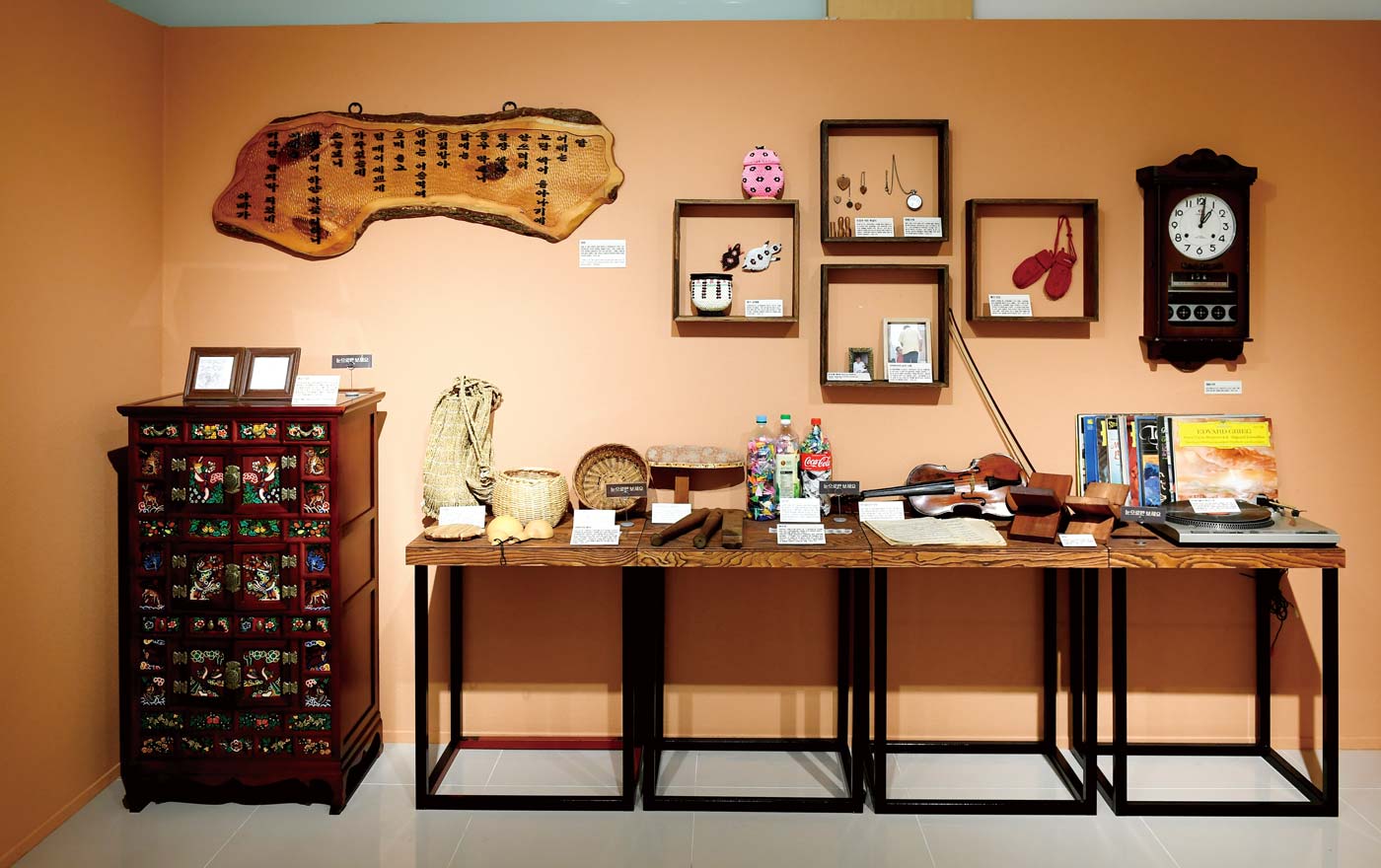
Among the items I saw at the "Father" exhibition in Korea, one in particular stayed with me: a turntable and a collection of vinyl records that a father had gifted to his daughter. That father, who had a deep appreciation for music, wanted his daughter—who had followed in his footsteps—to "listen to music the right way." Seeing that gift moved me deeply; it was a mirror of my own past, reflecting the days when I was able to enjoy fine music in comfort thanks to my parents’ support. It seems that every parent shares that same universal desire: to let their children hear only the best sounds and receive only the finest things in life.
Although I have traveled to Korea more than ten times for performances, this visit will remain the most memorable because it allowed me to feel the love of my parents—both physical and spiritual—at such a profound level. Moving forward, I want to become an artist who makes both my earthly parents and my Heavenly Parents proud. I realize that this is the only true way to repay the love of those who shielded me from life's harsh storms with their own bodies, ensuring that I would only ever know the very best.
32
Bookmark
Share
주소가 복사되었어요.