The Editors
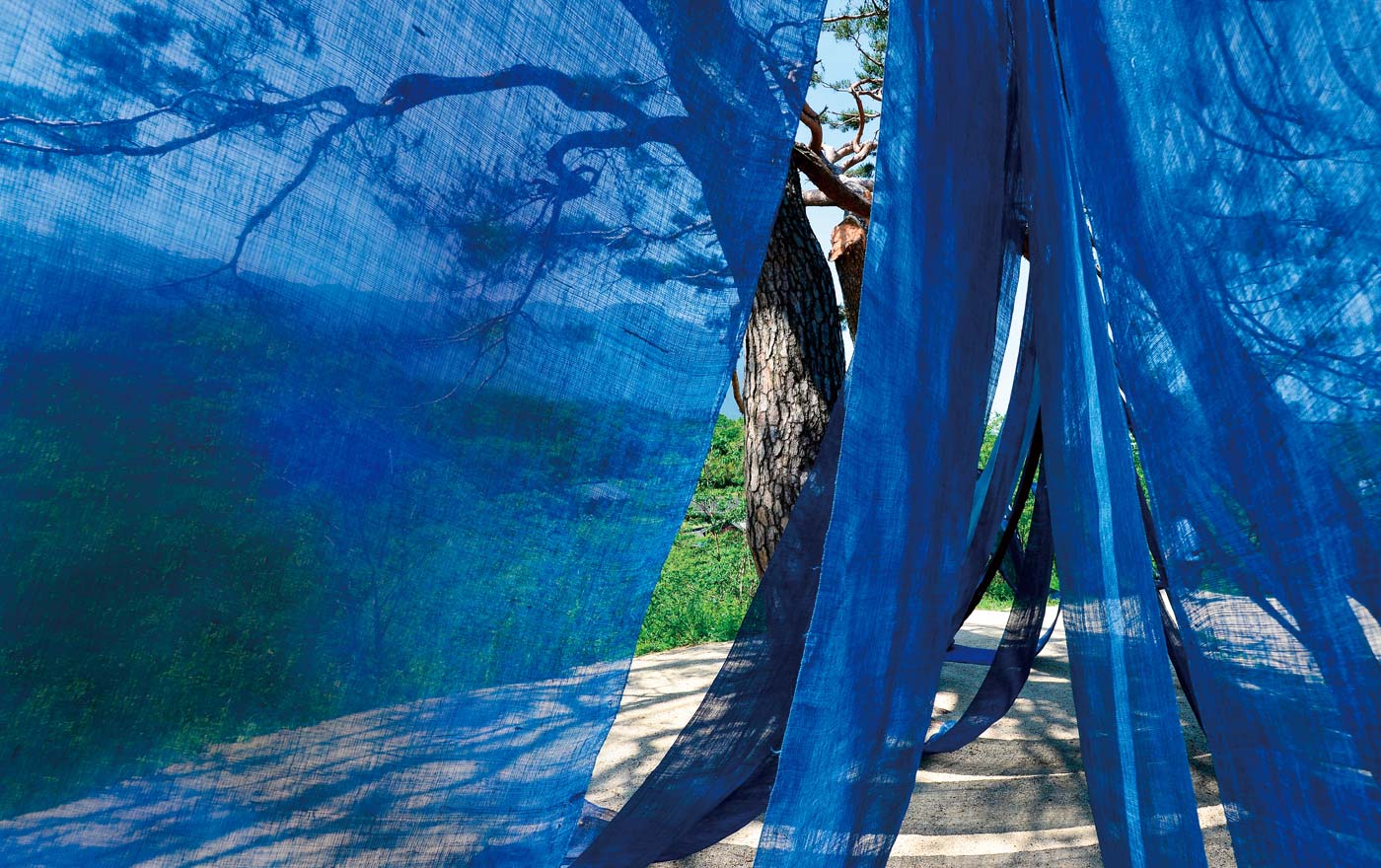
A sky clear with indigo and a sea steeped deep in the same hue—though both are called “indigo,” the shades they reveal to the eye are subtly different. The natural indigo dye extracted from the indigo plant, an annual herb, also develops a different depth of color each time the dyeing process is repeated.
The blue pigment obtained from fresh indigo leaves does not directly water-soluble. To make it absorbable into fibers, it must undergo a fermentation process in an alkaline environment. First, the harvested leaves are soaked in water to extract the blue pigment; then, lime powder is added and stirred to produce a thick sediment known as indigo paste. This paste is mixed with lye, yeast, and other ingredients, then aged for a long period to create an indigo dye vat. When cloth is dipped into the vat, it initially turns green, but as it meets the air, the dye oxidizes and gradually transforms into a steady blue.
The more the cloth is immersed and dried, the denser the color becomes, building layers of indigo that reach a profound depth. Once the color has fully seeped into the fabric, it does not fade easily but preserves its unique brilliance for years to come.
Just as indigo deepens through repeated cycles of dyeing, our faith deepens through repeated endurance and refinement. As we patiently endure trials that humble us, pray earnestly, and fill our spirits with God’s word, gratitude and spiritual awakening quietly permeate our soul. Faith deepened in this manner does not easily lose its light in times of hardship, nor does it fade with the passing of time.
40
Bookmark
Share
주소가 복사되었어요.